Sewer Smells in Your Basement: The Solutions

As you walk into your basement, you notice an odour like sewer gas. We can all agree that sewer gas is one of the most unpleasant smells known to man. It is important to understand why your home, or your basement in particular, smells like sewer. Failing to remedy the cause of sewer odours could lead to damage to your home and health.
Sewer Gas: A Health Hazard
Sewer gas is not just unpleasant. It contains a mixture of methane, ammonia, and hydrogen sulphide. At low concentrations, these gases irritate the eyes, throat, and respiratory tract — especially in a poorly ventilated basement. Prolonged exposure can cause headaches, fatigue, and nausea. Children, seniors, and people with asthma tend to develop symptoms more quickly. Methane is also flammable, which is not a major risk in a ventilated house, but it's one more reason not to let the situation drag on. In short, a sewer odour signals a leak in your drainage system and should be addressed promptly, both for your health and for the integrity of your building.
Learn to Recognize the Smells
First, it's important to correctly identify the odour in question. In a basement, you'll often encounter these types of smells:
-
Sewage: As wastewater decomposes in the city sewers, it releases noxious fumes and gases. These gases are unpleasant and smell like old sewage. Sewer gases can permeate through your drains when drain P-traps are empty. Most often, sewer smells occur in winter when drains are used irregularly.
-
Mould and Mildew: Musty smells are directly linked to the presence of mould or mildew near your drains. Typically, these odours appear when there is a leak in the drain or the pipes connected to it.
-
Stagnant Water: When water sits still, it encourages the growth of bacteria and mould that give off a heavy, unpleasant odour, sometimes compared to a mossy or swampy smell. This is common in poorly ventilated or rarely used basements, where humidity and warmth help microorganisms thrive and produce this distinctive odour.
Fortunately, taking care of drain clogs is relatively easy. You can clean out your drains yourself, or hire our team of professional plumbers to do it for you in the Montreal, Laval, and South Shore areas.
Get a quote 514-316-1043The 6 Causes of Sewer Smells in Your Basement
If you notice a foul sewer smell in your house or basement, here are the six possible causes in order of probability:
-
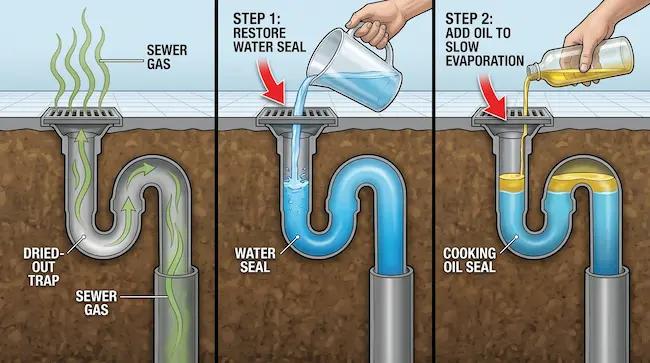
Dry Floor Drain
You have a water trap under a floor drain, laundry tub, or wash basin that has dried out from lack of use. Water in any trap under unused drains will eventually evaporate. That allows sewer gas to come up through the drain into the room. Solve this problem easily by pouring a pitcher of water into the drain to restore the trap seal. If the drain is rarely used, you can slow down evaporation by pouring a couple of tablespoons of cooking oil into the drain — this creates a floating film of oil that keeps the water from evaporating as quickly.
-
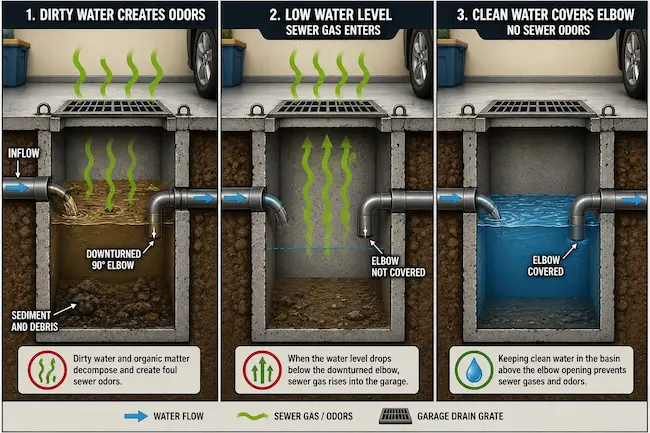
Garage Sewer Pit with Reverse P-Trap
Some garage sewer pits are equipped with a reverse P-trap — a P-trap installed upside down. Unlike a standard P-trap, which holds a standing water seal to block sewer gases from entering your home, a reverse P-trap cannot retain water and therefore provides no barrier against sewer gas. Two situations will cause odours: if the pit contains dirty wastewater, the decomposing organic matter will produce a persistent foul smell; and if the water level drops and no longer covers the trap opening, sewer gas will rise freely into your garage and basement. If you notice a sewer smell originating near your garage, inspect the sewer pit. This is not a DIY fix — a licensed plumber will need to reconfigure or replace the trap to ensure it holds water properly and seals sewer gases out.
-
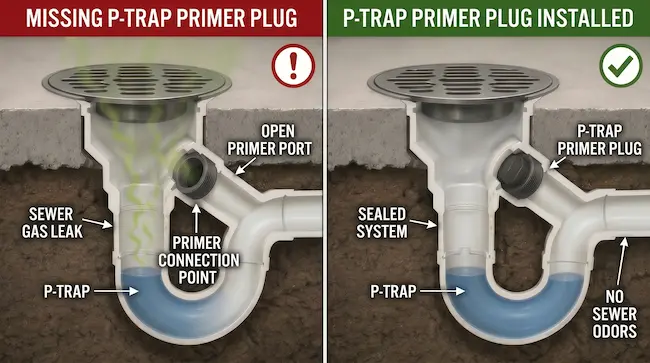
Missing Cleanout Plug
In a floor drain such as a shower drain, there should be a plug below the grate that collects hair and prevents odours from rising. Remove the grate and take a look. If the plug is missing, sewer gas will pass straight through — even if the P-trap is present — and this will cause odours. Sometimes the plug was removed during a cleaning and never put back. In that case, simply buy a new one at a hardware store and put it back in place.
-
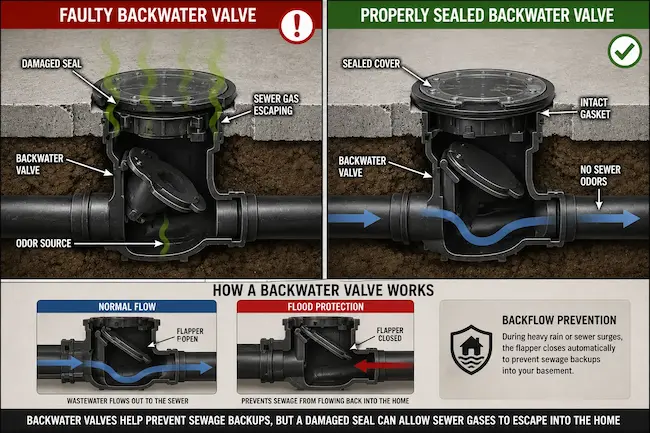
Unsealed Backwater Valve
An improperly sealed or faulty backwater valve can be an overlooked source of sewer odours in your basement. Backwater valves are designed to prevent sewage from flowing back into your home during heavy rain or sewer surges, but if the valve seal is worn, cracked, or was never properly installed, sewer gas can escape around it and infiltrate your living space. Unlike other causes, this one is not always visible without a closer inspection, as the valve is typically buried in the basement floor. Contact a licensed plumber to inspect the valve, assess the seal condition, and reseal or replace it as needed.
-
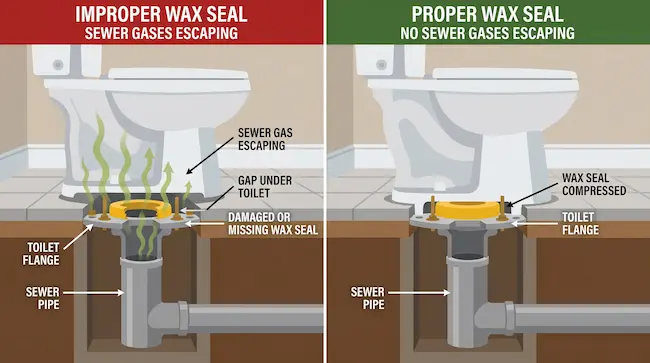
Toilet Wax Seal
The wax ring located between the toilet flange and the base of the toilet can be the source of sewer odours. If it's damaged or if the toilet rocks slightly, the seal breaks and allows sewer gas to escape from under the toilet. The solution is to remove the toilet and replace the wax ring. If the toilet is not stable, slide plastic shims between the base and the floor, then caulk the joint. This prevents a rocking toilet from damaging the newly installed wax ring.
-
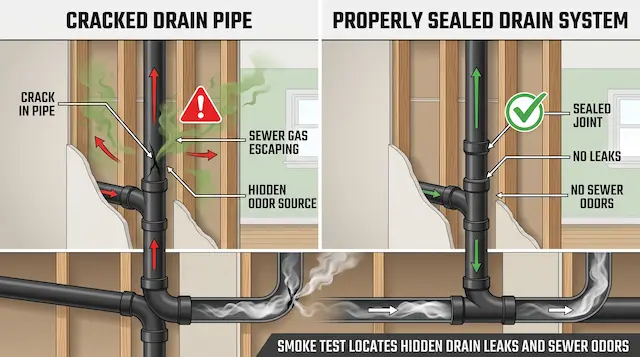
Cracks in Drain Pipes
If the odour persists, it's possible that a sewer line is cracked or a deeper joint is failing — for example, inside a ceiling or buried in a wall. After checking the simpler causes listed above, inspect every visible joint and use your nose to guide you. If you can't find the source, contact a plumber equipped for leak detection. This is the most reliable way to identify the problem quickly.
What Our Plumbers Find in the Field
About four out of five calls come down to this:
- Dry floor drain trap: 60%
- Missing cleanout plug: 20%
- Failed toilet wax seal: 10%
- Cracked or leaking pipe: 10%
If the smell is very strong or comes back a few hours after pouring water into the trap, suspect a leak or a venting issue.
Quick Checks in Under 30 Seconds
When faced with sewer odours, here are the first checks to perform:
- Pour a pitcher of water into every basement drain to restore the water level in the traps.
- Add a tablespoon of cooking oil to rarely used drains to slow down water evaporation.
- Remove the floor drain grate and check that the cleanout plug is in place.
- Get close to the base of the toilet: a stronger odour there often points to a failed wax seal.
- If the smell is stronger after rain, check your backwater valve.
Deep Cleaning Methods
If the quick checks didn't solve the problem, try these deeper cleaning methods. Start with the simplest options and work your way toward the more involved ones:
-
Pour boiling water or vinegar down the drain: Bring a pot of water or white vinegar almost to a boil, and pour half of it slowly down the drain. Wait a few minutes, rinse the pipe with cold water to solidify any lingering gunk, and pour the rest of the hot water or vinegar down the drain to wash it away.
-
Pour baking soda and vinegar down the drain: Run hot tap water for several seconds, then turn the water off. Pour one cup of baking soda down the drain followed by two cups of hot vinegar. Let the concoction fizz. After one hour, flush the drain with hot tap water.
-
Clean the P-trap: Put on rubber gloves and remove the curved portion of the plumbing beneath the sink with a wrench. Empty any water and gunk from the trap into a bucket. Take the P-trap outside and rinse it out with a garden hose. Reassemble the plumbing before using the sink again.
-
Clean the drain vent: In most houses, all drain vents terminate in a single opening on the roof. Climb up a ladder and clear away any leaves or other debris clogging the drain vent.
These steps are usually enough to fix the problem in simple cases. If the odour just won't go away no matter what you try, it's time to call an expert. Our professional drain cleaning service in Montreal, Laval, and the South Shore can save you from enduring the unpleasant smell of sewage any longer.
Get a quote 514-316-1043Advanced Odour Detection With Our Professional Smoke Test

If you've tried the common solutions listed above and still notice persistent sewer smells in your basement, the source may be hidden inside your drainage system. At Drain 5 Étoiles, we use a highly effective diagnostic method called a smoke test to detect odours quickly and accurately.
A smoke test allows our technicians to identify:
- Cracked or damaged underground pipes
- Improperly sealed floor drains
- Dry or defective P-traps
- Hidden connections leaking sewer gases
- Faulty backwater valves or venting systems
By gently pressurizing the system with non-toxic smoke, we can pinpoint exactly where odours escape, even when the problem is not visible. This helps avoid guesswork and unnecessary repairs.
➡️ Learn more about our smoke testing service and how it eliminates sewer odours: Smoke Test for Drains – Drain 5 Étoiles
Our smoke test is one of the most accurate and efficient methods available in Montreal, Laval, the North Shore, and the South Shore to diagnose persistent odour issues.